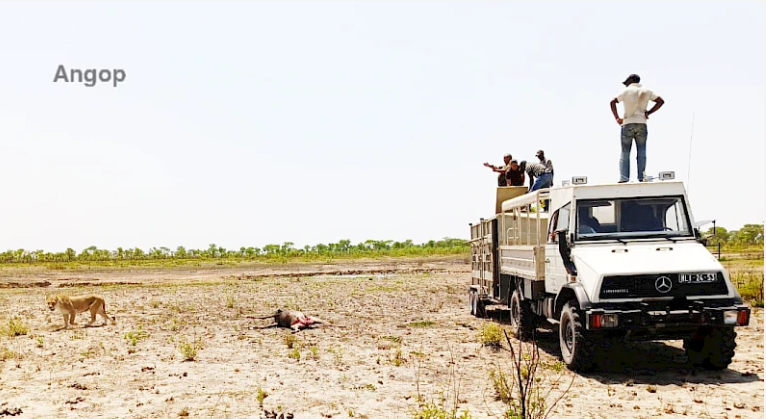
These are a six-year-old lion and three lionesses, offered to the park by the 3N farm, on the 17th of the current month.
The aforementioned animals were imported in 2018 from the Republic of Namibia and still have a useful life of 14 years.
With these four, Bicuar National Park has seven lions, five of which are female.
The information was provided to ANGOP today, Monday, in this city by the Reserve administrator, José Maria Kandungu, referring to being a great satisfaction for the management of the Park, in terms of ecosystem balance.
He declared that because they are mammals and are on the “red list” of the Convention on International Trade in Species Wild Animals Threatened with Extinction (CITES), have more incentive to increasingly invest in their protection.
“Repopulation is one of the major concerns of the Bicuar administration since we have species that no longer exist. such as buffalo, impala, zebra, ostrich, wildebeest and gazelle.
These are the main ones, and we can introduce others that are They easily adapt to the region’s climate,” he said.
He highlighted the partnership with some farms, where wildlife breeders introduce several species that the region has never had before and adapt well.
He appealed to wildlife breeders to unite around the protection of the environment and its ecosystems.
Requested the central government to review tax payments by wildlife farmers who are “very” high, given that there is a need for repopulation in the country and these have been fundamental partners.
Of the lions in the Park, there is one that was in captivity in the commune of Huíla, found with nutritional problems, went through a recovery process and has been in the reserve for three months, having had a “satisfactory” adaptation, according to José Maria Kandungu.
The Bicuar National Park is located in the southwest region of the country, on the Huíla Plateau, it was established in 1938 as a hunting reserve, and elevated to national park in 1964.
The relief of the park is dominated by sandy hills with character shrubby, with a semi-arid tropical climate.
It has an area previously estimated at around 7,900 km2. Today, it only has around 6,750 km2, thanks to a Decree colonial period that proclaimed areas to the North of the park, aiming at the expansion of the Capelongo Colony. EM/MS
Source: https://angop.ao/noticias/ambiente/bicuar- reintroduces-new-lions-into-the-reserve/
Available daily from 08:00 to 22:00. This support line helps clarify doubts, assist with reservations and guide you towards the best accommodation and tourism services.
 English
 Português




 WhatsApp
 Phone
 Email